It is currently Sat Sep 12, 2026 3:45 pm

All times are UTC [ DST ]


Post new topic This topic is locked, you cannot edit posts or make further replies.  [ 3 posts ] 
Author Message
Shaggy
PostPosted: Thu Sep 29, 2005 9:38 pm 
Club Elder Offline
User avatar

Joined: Sun Feb 22, 2004 7:10 pm
Posts: 3885
Location: BPT Hell
Reputation: 8

GTR


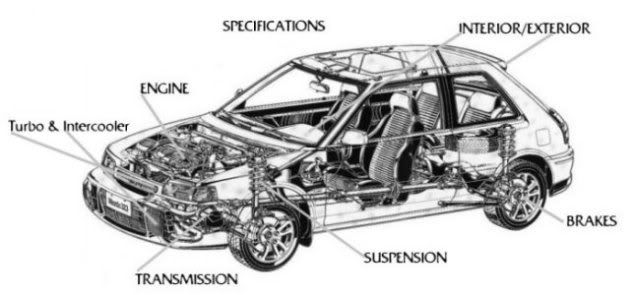
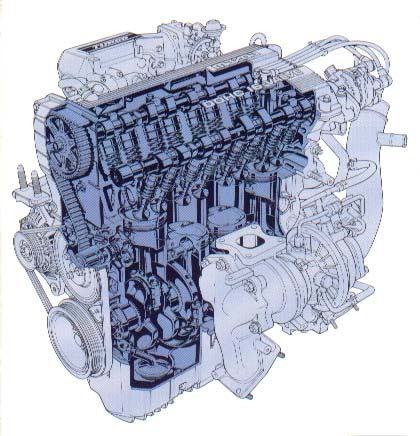
The Mazda 323 4WD GT-R is powered by an evolution version of the turbocharged and intercooled, type BPD, twin-overhead-camshaft, 16-valve, 1.839 cc, inline 4-cylinder engine. This power plant has been specifically developed for the GT-R by Mazda's Motor Sports Engineering Group. The type BPD "Big Turbo" produces 136 kW EEC (139 kW DIN) at 5,000 rpm and a maximum torque of 235 Nm EEC (240 Nm DIN) at 4,500 rpm, figures which are 13 and 8 % higher, respectively, than the output of the type BPD Turbo that powers the 323 4WD GT-X. The engine's strengths, both power output and torque characteristics, are in the mid-through-high-rpm zone, above 3,000 rpm up to its maximum allowable 6,500 revs. Numerous improvements have been carried out in the engine's internals, and the new "Big Turbo" and larger and more direct intercooler system is adopted in the GT-R unit.

The evolution version of the Type BPD, DOCH, 16-valve, EGI/Turbocharged Engine.

The type BPD DOCH engine has an 83.0 mm bore and an 85.0 mm stroke for a total capacity of 1,839 cc. The compression is 8.2:1 and the engine requires premium unleaded fuel (minimum RON 95). The cylinder head is precision diecast aluminum, carrying twin overhead camshafts. The single-stage, cogged-belt-driven camshafts operate 4 valves per cylinder via inverted bucket tappets that incorporate hydraulic lash adjusters, which maintain precise clearance without periodic adjustment. The camshafts are hollow-cast to reduce weight, each camshaft being 500 grams lighter than a comparable solid camshaft. The valves are Vee-inclined at an included single of 50 degrees in a compact pentroof combustion chamber with squish area. The spark plug is centrally located in the combustion chamber. Valve diameters are 33 mm (intake) and 28 mm (exhaust) having 8.0 mm and 8.5 mm lifts, respectively. The exhaust valves are sodium cooled. Encased within each thin, hollow, 6 mm valve stem is metallic sodium, which, when exposed to heat, liquefies and helps dissipate heat from the head of the valve.

Further, the piston's top ring groove area is reinforced with integrally cast nickel-based "metal foam". the nickel foam is produced by electroplating urethane foam, which is then melted away, leaving porous metal "foam". The foam ring is integrally cast in the piston by the squeeze-casting method. The metal reinforced, squeeze-cast piston with cooling channel was first adopted in Mazda's direct-injection diesel engine, whose piston are subjected to extremely high thermal load during the combustion process. The metal reinforced piston is about 10 % lighter as compared with an aluminum piston with Niresist top ring groove, and according to Mazda's testing has an extended piston life by threefold. The piston's skirt is also zinc-plated for improved wear resistance, and its inside is cooled by an oil jet. The forged steel connecting rods have a larger section for added strength. The connecting rod's big-end bearing is now of a racing-type kelment metal. The cast iron cylinder block's lower opening is reinforced by a Main Bearing Support Plate (MBSP), an intercately shaped steel plate which has dual functions: stiffening the block and effectively reducing vibrations, and securely supporting the lower cranshaft bearing caps. The oil sump is made of rigid, sound-damping diecast aluminum. Its front end is bolted onto the transaxle casting, contributing to overall power unit rigidity.

Fuel injection is by the latest digital-electronically managed, L-jetronic, multi-port injection system, with a flap-type airflow metering device. Fuel is injected to two cylinders simultaneously (cylinder 1 and 3 in one group and 2 and 4 in the other), in sequence. The lubrication system employs a high-pressure pump, and a water-cooled oil-cooler is integral with the filter. Ignition is electronically controlled with the engine control unit (ECU) determining option ignition timing by signals collected from the distributor, throttle sensor, airflow meter, coolant temperature sensor and knock sensor

TURBOCHARGER AND INTERCOOLER

The turbocharger was specifically developed for the GT-R application by IHI. The RHF6CB turbocharger has a 62.0-mm diameter turbine and a large 65.0-mm compressor. By comparison the turbo for the type BPD 1.8 liter engine that powers the GT-R has a 52.5-mm diameter turbine and a 52.5-mm compressor. It is commonly believed that a big turbo is employed for high rpm power. The Mazda and IHI teams have proven with the GT-R turbo installation that this is not necessarily so. They have sought and achieved an optimum balance between high power and quick mid-to-high rpm response. A relatively small "A/R" ration, a value of 16 to the GT-x's 15, was one of the means they adopted to assure these desirable characteristics. "A" is the smallest scroll area and "R" the distance between the turbine-shaft center and the center of area "A", the two factors used in calculating turbocharger's performance characteristics. The turbocharger employ's a steel turbine wheel for its proven reliability under the rigors of competition. In Mazda's testing it suffered little in responsiveness when compared with a unit fitted with an experimental ceramic turbine; the latter may be decelerating too quickly for any appreciable difference in pickup that follows. The turbocharger shaft is supported by ball bearing, which improves turbo response by as much as 7% by Mazda's testing.

The turbocharger is watercooled. Boost is controlled by a dedicated computer map, and its maximum pressure is 450 mm of mercury (Hg). The standard air-to-air intercooler is about twice the size of the unit fitted in the GT-X (235-mm wide, 225-mm high and 65-mm deep), and has a heat dissipating capacity of 6,150 Kcal/hour which is 36% more than the GT-X's. It features efficient "zig-zag" fins which increase cooling surface area. The intercooler is located in the nose of the car, immediately ahead the coolant radiator. the path the boosted air takes to the engine's intake system is as direct and short as possible, so that pressure loss is minimized.

Manifold System

With the "Big Turbo", it has become critical that boosted air is distributed to the individual cylinders in equal volume and pressure. Likewise, the energy of exhaust gas must be fully exploited to quickly "spin-up" the big turbine in order to obtain high power and minimum turbo lag.

The Mazda engine design team has perfected a unique manifold system, combining the air volume and pressure equalizing intake and exhaust extractor manifolds.

It was Mazda's finding that with more a more commonly used equal-length intake manifold, the tract nearest to the air entry received the least volume/pressure, and the farthest tract the most. By trial, measurement and testing, the engine team perfected a cast aluminum manifold that has intricately curved and sized "walls" between the individual tracts leading to the intake ports to equalize air volume and pressure. A bonus is that the manifold's swirl generating effect contribute to efficient combustion. The equalizer intake manifolds have shown its effectiveness in improving torque from idling to the Group-A 300-bhp-plus output level and all the way up to maximum revs.

The exhaust manifold has individual tracts collecting at the turbocharger entry. These tracts are in two groups; the tracts from cylinders 1 and 4 are routed to the center, and those from cylinders 2 and 3 to the outside. This routing allows nearly equal tract length. The complex manifold is made of cast ferrite steel, for which the lost-form casting method is employed. Not only is this about 20 percent lighter, much stronger and its passages much smoother than a conventional cast iron one, but also its surface finish is much smoother.

The exhaust manifold's extracting ability precludes an unwanted rise in exhaust back-pressure, which would cause the dilution of the combustion chambers with exhaust gas. This would, in turn, raise cylinder temperatures. Enriching the fuel/air mixture to lower combustion temperatures would obviously deteriorate fuel economy.

The GT-R exhaust system adopts a 3-way catalytic converter with larger capacity but a reduced number of cells, and a new main silencer that assures reduced resistance to gas flow.
Image


Last edited by Shaggy on Wed Jan 25, 2006 5:38 pm, edited 3 times in total.

Top
 Profile  
 
Shaggy
 Post subject:
PostPosted: Thu Sep 29, 2005 10:00 pm 
Club Elder Offline
User avatar

Joined: Sun Feb 22, 2004 7:10 pm
Posts: 3885
Location: BPT Hell
Reputation: 8

History:

A provocative "if" at the end of Warmblod's request....
...the challenge begins

The GT-R story began in June 1988. Achim Warmblod, a former world-class rally driver and president of Mazda Rally Team Europe (MRTE), sent a long facsimile to Mazda's head office in Hiroshima. In brief, Warmblod expressed the need for Mazda to create a presence in Europe both as a car company and for the Mazda 323. He further stressed the need to appeal both to the younger generation and to the enthusiast - the perfect way to foster such appeal being victory in the World Rally Championship (WRC). Warmblod's vision was for Mazda to build a 323 "hot version" to do the job. His facsimile ended with a provocative "if", urging Mazda to consider whether they really did want to win the World Rally Championship.


The Warmblod facsimile

Dear MR. Yamanouchi, It has been a long time since I met you in Hiroshima. Forgive me for my long silence and I hope you are very fine. I have always been considering ways to enhance Mazda's distinctive image through our rally activities. Today, everywhere in the world we can see Japanese cars which have excellent quality and attractive equipment, along with a reasonable price. However, recent yen appreciation has forced a change in the market situation of Japanese manufacturers, therefore, it is important to get more and more value out of motor sports. Of course, I want to apologize as we could not achieve the success that everybody hoped for at this stage. Please understand our difficulty: the current 323 4x4 is designed as a normal road car. The Lancia, for example, is built to compete in motor sport, especially the WRC. Also VW and Opel are now making special 4x4 Sports versions for competition entry in the near future. As almost all the manufactures are now concentrating on making high-potential 4x4 Sports versions for the beginning of 1990, please allow me to propose to you the notion that the 323 be supported by the younger generation. The car must give an image of strength and high performance along with reasonable price. From this point of view, the top model of the new 323 should provide excitement for the younger generation. I belive the next 323 range also includes a sporty 4x4 version, however, I am a little concerned about its performance and its concept.
I would like to use the Lancia Delta 4WD, and its remarkable success in Europe, as an example to make the picture clear - they sold 5,882 cars in 1987. This year they are planning to sell 8,000 cars called the Inergrale, in Europe, at a price of 36,000 DM. This is the evolution model of the 1987 model of the Lancia 4WD. This success is increasing their sales volume, not only of the Lancia Delta HF 4WD, but also of their other models. Lancia is already thinking of another evolution for 1989: a 16-valve 2.0 litre engine to keep their competitiveness in the WRC. Japanese manufacturers will also start an attack to compete against Lancia from next year onwards. Therefore, the next 4WD model must overcome all of them. If Mazda can produce 5,000 units of the limited "hot version" (which is the minimum requirement under current F.I.A. regulations) for the younger customer and enthusiast, this will definitely be an important image leader world-wide. I belive that "if" Mazda wants to recreate a new, younger image and recover the young customer market, Mazda needs a strong, high-potential sports version which can win the WRC....
Yours faithfully,

Achim Warmblod


Mazda's reply
"We are determined to win the World Rally Championship, and the car to perform the task is the 323 GT-R. Mazda will begin producing the car in numbers needed to gain homologation for the WRC"
Mazda's development aims are threefold: firstly to produce the GT-R with an engine having the potential to win the Group A title, secondly, to achieve a balance between the engine and chassis so that the car can be competitive in the WRC Group N where modifications are restricted, and finally, to give the GT-R stunning performance to satisfy the enthusiast. Mazda will produce 5,000 cars to meet WRC homologation rules. These vehicles will be sold throughout Europe and Japan. The GT-R was built to become a WRC champion. It is a truly exciting car - both technically and emotionally.

A summary of some of the major advances and improvements over the old GTX:
When tuned for Group A competition, the GT-R`s engine punches out more than 300 hp. This remarkable engine breathes better, with a larger turbo-charger rotor spinning on ball bearings, and cooler- thanks to an enlarged intercooler mounted in front of the radiator. Baffles in the surge tank equalize intake pressure at all four cylinders. Sodium-cooled exhaust valves dissipate heat faster. The pistons have cooling channels, and the con-rods are hardened.

There is no change to the basic suspension design; the original 323 was proof enough of the suspension's potential. Group N regulations prohibit major changes to suspension systems, so the GT-R's suspension was designed for Group N success and on-road use. Basically, the new system has stiffer bushes and increased spring rates for a heightened steering response. New 15"x5.5"JJ alloy wheels fitted with 195/50R15 low-profile tiers together with the optimum combination of stabilizer bar, shock absorbers, and springs have altered front and rear roll rigidity for improved traction.


The GT-R's brakes are set up for Group N competition which prohibits major modification to the brake system. Together with the larger diameter wheels, the effective diameter of the discs is greater. Brake pedal stroke is shorter and brake fluid pressure is lower thanks to highly rigid calipers, large-diameter wheel cylinders, and a large-diameter master cylinder. The GT-R's braking system provides more than enough margin to allow the driver to make full use of the engine power, permitting acceleration all the way to the corner.
The GT-R's styling enhances its rallying potential, as body design cannot be changed, even in Group A. The bonnet has three air bulges to allow the tremendous engine heat to escape. The enlarged front bumper houses the large air intake, side flares, and an air spoiler is fitted below the rear bumper.

If you're not excited by this practical description, we advise you to forget about purchasing this car.

This is a limited production car with one purpose - to win the World Rally Championship. Only drivers with the skill to enjoy a good road, those few with the talent to race in group N rallies, or those who can imagine racing against the clock on the Col de Turini Pass can fully appreciate the GT-R. Please be patient. Modified GT-R's won't be seen in Group A competitions for about another year, but even before then, the GT-R will make its mark - a clue to which car will win the 1993 World Rally Championship.

The design team

The team that developed the GT-R, following Warmblod's request, was Mazda's Motor Sports Engineering Group - the same small team of young technicians who triumphed at the 24 Heures Du Mans in 1991. The following section summarizes their reports

Image


Top
 Profile  
 
Shaggy
 Post subject:
PostPosted: Wed Jan 25, 2006 5:36 pm 
Club Elder Offline
User avatar

Joined: Sun Feb 22, 2004 7:10 pm
Posts: 3885
Location: BPT Hell
Reputation: 8

GTX

The standard specs of a Mazda 323 GTX : 1.840 cm³, 122kW, 185 bhp, 0-100 km/h 7.8 sec. Top speed 210 km/h.

History
Group A rallying is the sport from which the Mazda GTX was spawned. Mazda took the plunge into full Group A competition in 1986 with their B6 1.6 litre turbocharged 4WD 323. This vehicle enjoyed considerable success over its fairly short competition life, which led to the continuation of the small turbo 4WD theme. It was in 1989 that the all-new BG8Z Familia was introduced. The new car received a larger BP engine (1.8 litre) and made its rally debut in the 1990 Thousand Lakes rally. It then continued competing quite successfully, giving Mazda another motorsport car to complement the road-racer RX7.The ultimate version of the Familia is the awesome (but quite rare) GT-R. This hard-edged car was brought into action in the latter part of 1992.

Chassis
The 3-door only Familia GT-X weighs in at 1180kg and is poised on a 2450mm wheelbase, with an overall width of 1690mm and a length of 4030mm. Its suspension system comprises a compact arrangement of MacPherson independent front struts, and transverse A-arms with trapezoidal twin-link strut rear end. To help reduce understeer, a fairly large solid 20mm swaybar is also bolted under the back end.

Engine torque is put to all-four wheels though a viscous front-to-rear LSD contained within the transverse 'box, with distribution varying depending on available traction. Compared to cars such as the Subaru WRX, the Familia GT-X is superior in tight manoeuvres and its compact size enables the driver to pick a flowing racing line through most corners. The vehicle we had on test came to us with extremely harsh aftermarket struts fitted ex-Japan, and although the ride was very stiff, the overall balance of the car was still maintained. With careful throttle control, the little monster can really be juggled from everything from mild under steer to snap oversteer. (The latter only happened with the test car when there was a mid-corner bump that could upset the rear end.)

Braking for the Familia is by virtue of a set of four reasonably sized discs (vented at the front), and it pulled up well with no fade (under road conditions at least). We did notice the car getting a little jumpy under heavy braking at some times, but this may have been caused by the aftermarket suspension. Speed-sensitive power steering is fitted to the GT-X as standard and it performs very well, but it's a little bit too low in ratio for our liking. There's minimal freeplay, the amount of power-assistance at varying speeds is pleasing, and a fair amount of feedback is available through the wheel at all times.

Externally, the GT-X is based on the conventional Familia, but it comes with only two passenger doors. To keep everyone happy though, a mild body kit is also fitted, comprising a revised front bumper (with an intake to feed air to the intercooler), side skirts and a rear roof spoiler. Without it, the GT-X would look just like any other shopping trolley.

The hot GT-R Familia we mentioned previously scored a set of 15 inch alloys to fit a larger set of brakes, but the GT-X makes do with 14 inch alloys standard wearing 195/60 rubber. The car we had was fitted with fairly ordinary tyres and it did lose grip around corners at quite an early stage, but it's a nothing a good set of rubber wouldn't improve upon.

The interior of the GT-X is very functional with well-laid out instrumentation, easy to reach controls and good seating. There's plenty of room in the front, but the back can be tight when there's a tall person in front with the seat set back.

Engine
The 1.8 litre BP turbo engine is the source the GT-X Familia's punch. It's a transversely mounted DOHC engine with 16 valves, EFI and an air-to-air intercooled turbo. The Japanese Domestic Car Market Book lists it as being good for 133kW at 6000 rpm, and 237Nm of torque at 3000. However, this output may vary slightly, depending on the fuel octane being used - Japan has quite high grade fuel. A static compression ratio of 8.2:1 is used, and it's low enough to allow the use of normal unleaded fuel - however, premium grade is recommended on the filler flap. Being a knock sensed car you certainly can feel it performs better with PULP in the tank. On the road the BP turbo feels very similar to Mazda's larger F2 engine as fitted to the MX-6/626/Capella, with a flat torque curve and excellent boost response. We'd guess that the turbocharger fitted as factory is fairly small, as the small green boost light on the dash glows very frequently. (Well it did with MK driving it! - Ed)

Performance
The little GT-X is a good all-round performer. Through fast corners, in a straight line, either around town or on the highway - it's very capable. The combination of all-wheel drive 134kW and 1180kgs is certainly a wonderful thing.

Pushing through corners, the aftermarket suspension fitted to our car gave an incredibly firm ride with minimal roll. Because of this, it did become very skitish whenever the road got slippery, and it really flicked the back end around if it hit a bump mid-corner. It did feel though that the car had inherent mild turn-in understeer that could be easily be converted to oversteer with a throttle lift-off. In the wet, the car showed quite a lot of understeer and a tendency to slide prematurely, but this was probably a result of the tyres and the aftermarket suspension, rather than a characteristic of the car itself.

If you can get the launch right (which isn't as hard as some other 4WD turbos), the GT-X is listed as giving a 0-100 km/h time of 7.8 seconds and it will pull willingly to its 210 km/h top speed.

Official Mazda test data also list the car capable of returning 7.3l/100km at a steady 90km/h, while we got around 11 litres/100 km during our test. That'll give it quite a good range given its 60 litre saddle-type fuel tank.

Modifications
Mazda have fitted a cheap exhaust system and intercooler that could be easily improved upon by the average enthusiast. Bolting up a 3 inch high flowing exhaust system should be the first mod (probably good for another 13kW on its own) and a larger turbo intercooler would be recommended if you want to increase boost - and don't we all?! To maintain reliability, we'd guess that the engine would perform very well with around 14 psi of boost pressure. The air intake system can also be freed up with an aftermarket pod filter or cold air duct to the factory airbox. So with an exhaust, bigger intercooler, boost and a proper air intake you should be talking around 170kW, which should transform the car into a real road stormer.

On the other hand though, an extreme full engine build (along the lines of the ex-rally cars) might give the hot hatch around 220 or more kilowatts. And who'd ever guess by looking at it??

Since the car we had was equipped with way too hard struts, it's difficult to make suggestions on improving the standard suspension system. A mild increase in spring stiffness, quality dampers, Nolathane bushes and a hi-performance wheel alignment would surely make a good improvement on a road car though. The bigger brakes (and wheels) from the GT-R would also be a good upgrade if you had access to the parts. Perhaps Mazda 626 brakes will fit with some mods?

Buyers' Guide
The Familia GT-X was released in 1989, and (to the best of our knowledge) was limited to the Japanese domestic market only. The reason that they're now starting to appear on Australian soil is thanks to Japanese used vehicle importers. Such cars are typically imported to Australia in fairly good condition but may require some detailing and/or repairs. Note that the Familia must be fitted with a compliance plate if you want to legally drive it on the road. Our 90-odd thousand kilometre car was supplied to us by Adelaide Jap Imports and was ready to be sold for only A$13,500 - a true performance bargain! However, if you want the electric sunroof, windows etceteras of the up-spec models, the price will climb to around A$16,500.

Many of the mechanical components of the car are also common with the locally delivered BP-powered 323s and Lasers. It is suggested that virtually all of the engine and drivetrain system is the same, while the body panels are completely different around the rear, as are the doors. The front end is very similar to the local 323 though.

And if you're thinking of buying one, make sure the clutch isn't slipping - a common problem of constant 4WD turbocars. Labour and parts to fix such a woe can be expensive.

Performance of Intended Role
Although it was designed to be the platform for a Group-A winning rally car, the Familia GT-X was marketed and perceived primarily as a pocket-rocket type of car. Its conventional hatchback practicality, plain exterior wrapper and high level of refinement was the main reason for this. We can only imagine if its engine and mechanicals were packed into something that looked like the MX-5... But what the GT-X does deliver is an excellent blend of everyday run-around practicality, outright acceleration and dynamic handling.

Summary
For the money, the GT-X Familia is the perfect car for someone that wants to go fast and wants to be a little bit different from the rest of the flock. It's practicality and economy are hard to beat.

_________________
*******R.I.P - The Mystery Machine BA TURBO *******


Top
 Profile  
 
Display posts from previous:  Sort by  
Post new topic This topic is locked, you cannot edit posts or make further replies.  [ 3 posts ] 

All times are UTC [ DST ]


Who is online

Users browsing this forum: No registered users and 19 guests


You cannot post new topics in this forum
You cannot reply to topics in this forum
You cannot edit your posts in this forum
You cannot delete your posts in this forum
You cannot post attachments in this forum

Search for:
Jump to:  

Protected by Anti-Spam ACP Powered by phpBB® Forum Software © phpBB Group
Karma functions powered by Karma MOD © 2007, 2009 m157y